 clubstats.cricket
PlayHQ runs your season. ClubStats preserves your legacy.
ClubStats was built to work alongside the systems clubs already use. It gives your club a dedicated place for its history, statistics, records and player stories, so the past stays accessible while the next season runs.
It is not a replacement for official competition management. It is the club-owned archive and presentation layer for the records that matter beyond the current fixture list.
Built for public records, not hidden spreadsheets
Use PlayHQ for the season. Keep ClubStats for the story.
PlayHQ is built for the operational side of cricket: registrations, fixtures, scoring, results and competition administration. Those workflows keep the season moving and provide the official source data clubs rely on.
ClubStats serves a different purpose. It brings together the history around those scorecards: player careers, all-time records, milestones, season summaries, honour boards and the context that makes a club's numbers meaningful.
The two platforms can work together. Clubs can keep using PlayHQ for competition management while building a permanent ClubStats archive for players, members, families, supporters and future committees.
Why a club's legacy needs its own home
A current season system is not always a complete club archive. Historical records can remain in MyCricket exports, spreadsheets, PDFs, yearbooks, old scorebooks or the memory of a long-serving volunteer.
That makes it difficult to answer the questions clubs ask every year: Who has the most runs? Which players reached a milestone? Who captained the premiership side? How does this season compare with the players who came before?
ClubStats gives those records a maintained, searchable and public home. The goal is not to replace the systems that run the competition, but to make sure the club's own history does not disappear between them.
Bring historical records forward
Clubs rarely start with a perfect data set. Some seasons have detailed scorecards. Others have career totals, annual reports or carefully maintained spreadsheets. Player names, grades and team labels can change across decades.
ClubStats is designed for that reality. Historical records can be assessed, cleaned and mapped into the platform alongside current-season data, giving clubs a practical path from scattered files to a usable archive.
Where tenant-approved, built-in Automatic Imports can bring current Play Cricket data through the same validation, player matching and review process. PlayHQ exports and other structured sources can be handled through the club's import workflow as well.
Make the numbers mean something
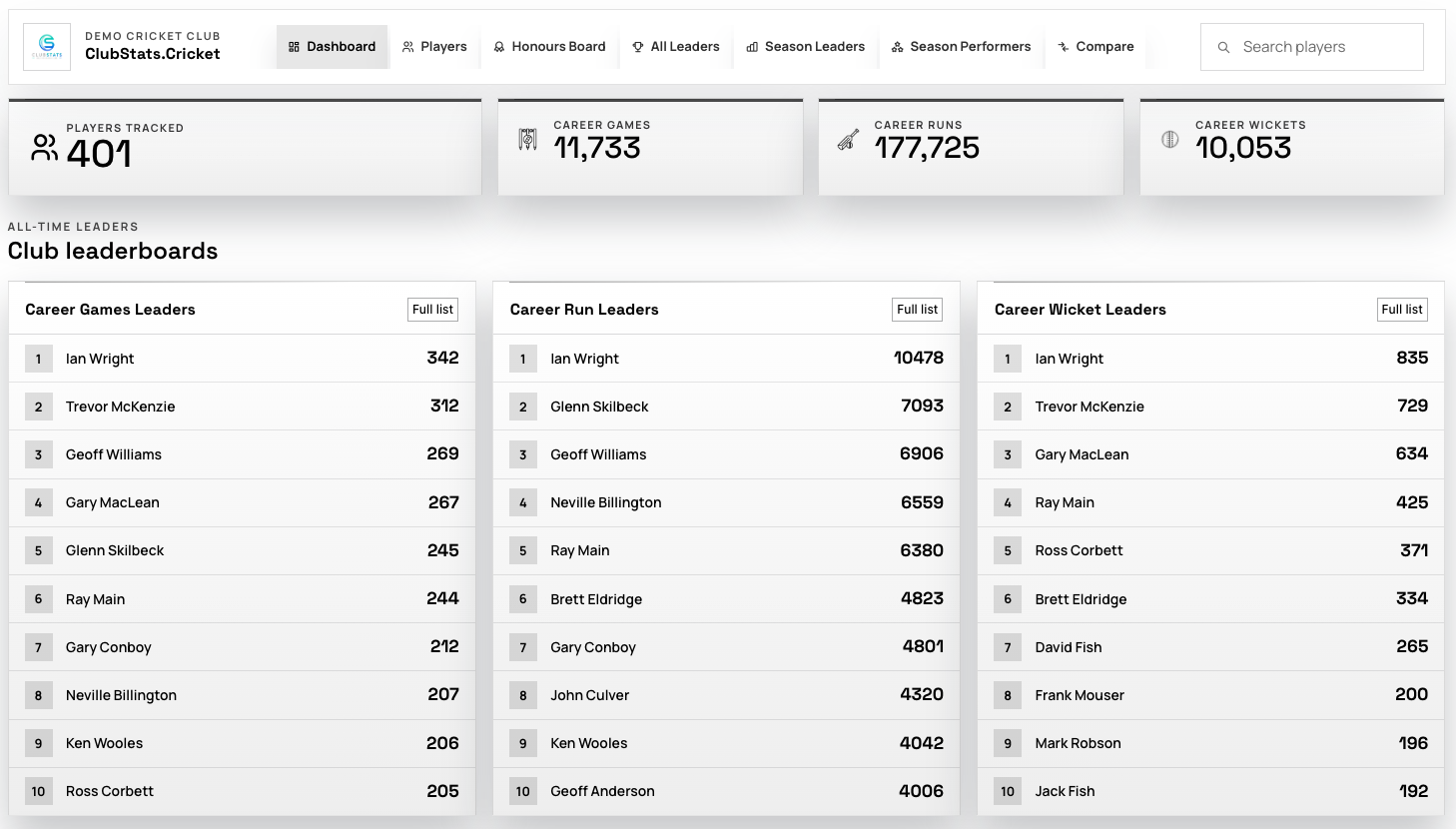
A club archive should be more than a data dump. ClubStats turns records into public player profiles, all-time leaderboards, season summaries, milestones and match context that players and supporters can actually use.
Built-in Match Editor tools help authorised club admins review and correct match details when a source record needs attention. Player Analysis adds context around batting, bowling and fielding performance across seasons.
Honours Board is an experimental workflow for preserving awards, premierships, life members and other recognition that may not be captured by a scorecard. Fantasy Cricket is planned for Summer 2026/27 as a future way to engage clubs and supporters.
Built for the people who carry club history
Club records are often maintained by volunteers who already have enough to do. ClubStats reduces the need to rebuild formulas, reconcile separate files and prepare the same records again for presentations, awards and end-of-season summaries.
It also gives the club continuity when committee roles change. The history belongs to the club rather than to one person's laptop, inbox or spreadsheet structure.
For a club committee, the result is a clearer public experience and a safer long-term home for the records that make the club worth remembering.