 clubstats.cricket
Built by a cricket tragic who believes club history should never be lost.
ClubStats started from a familiar cricket club problem: the numbers mattered, but the records lived in too many places. Current fixtures and scorecards had one home, old season books had another, and the most meaningful parts of club history were often stored in spreadsheets, PDFs, personal folders and volunteer memory.
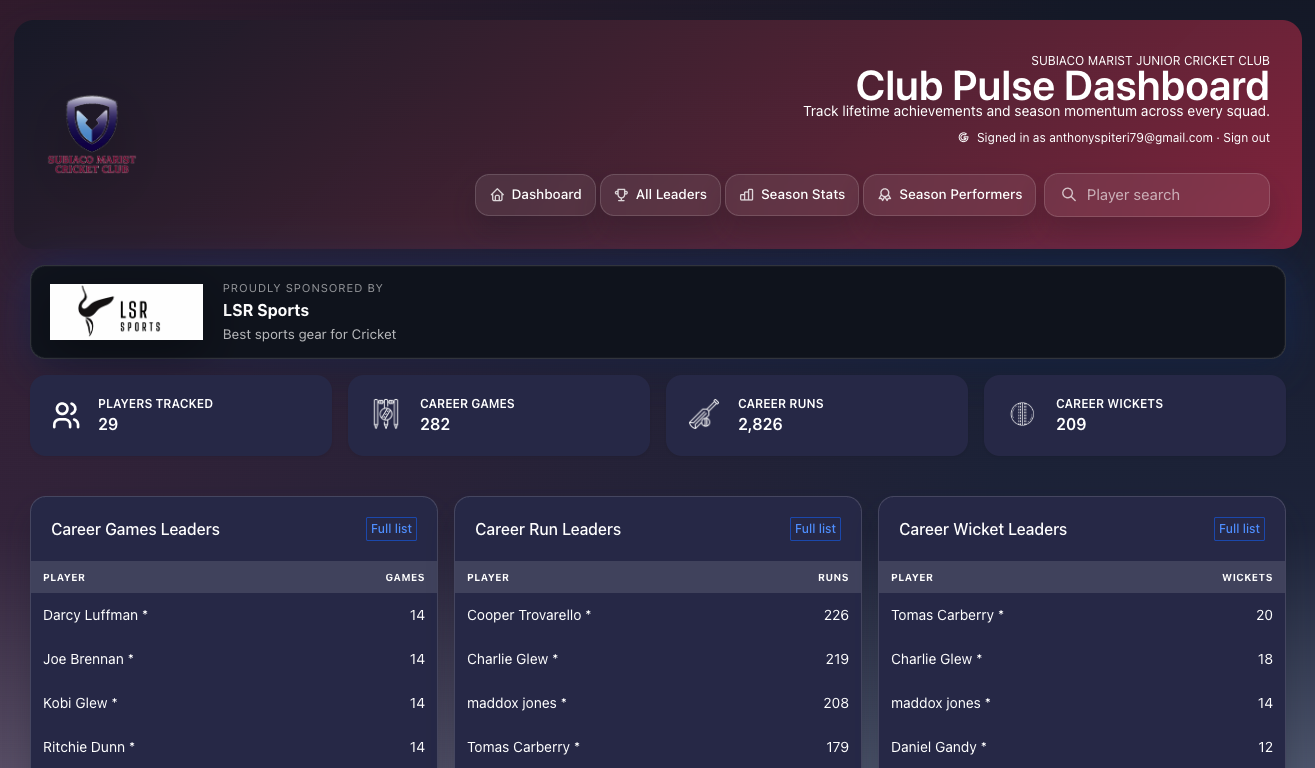
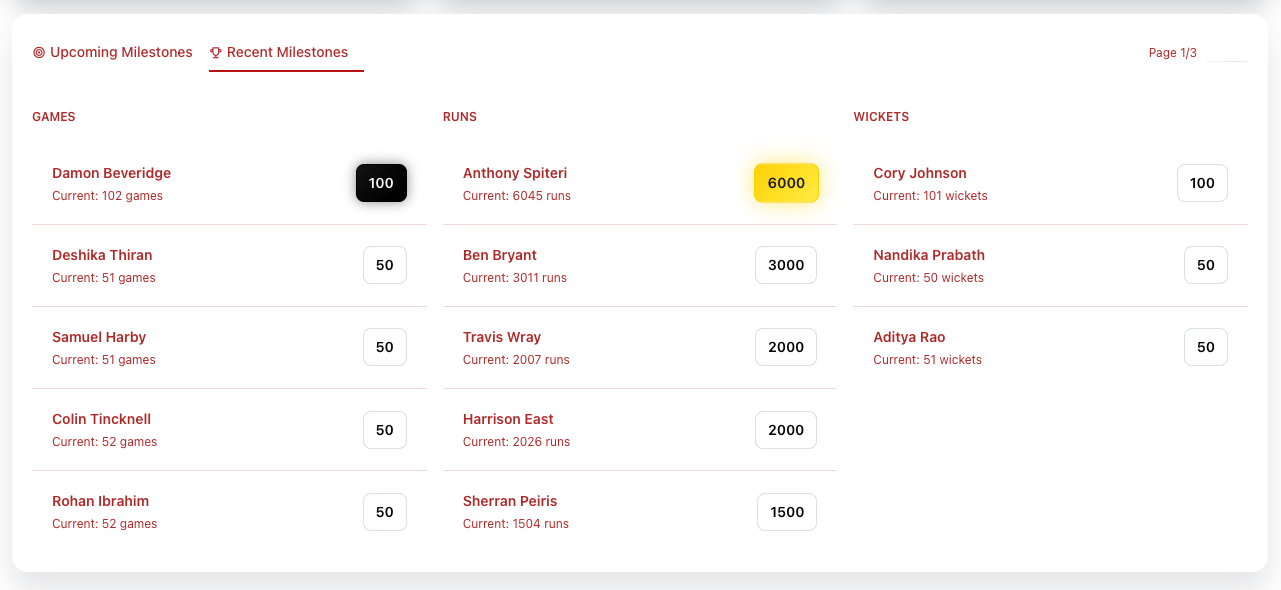
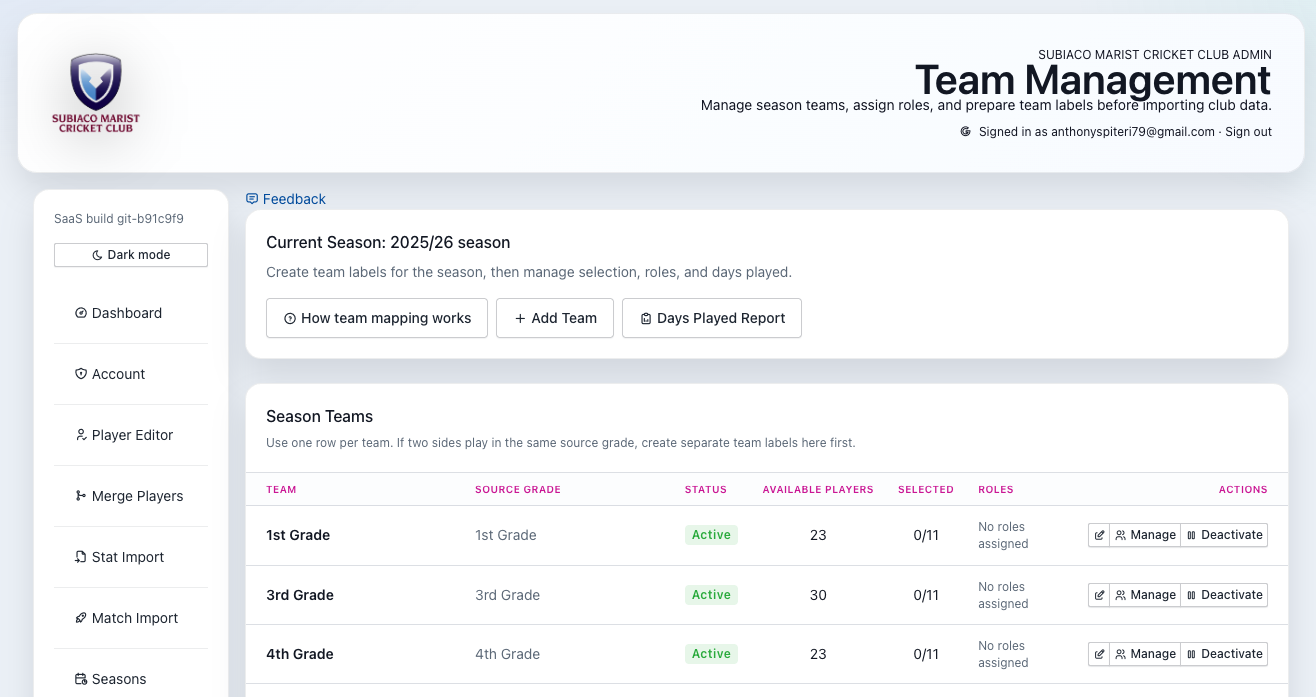
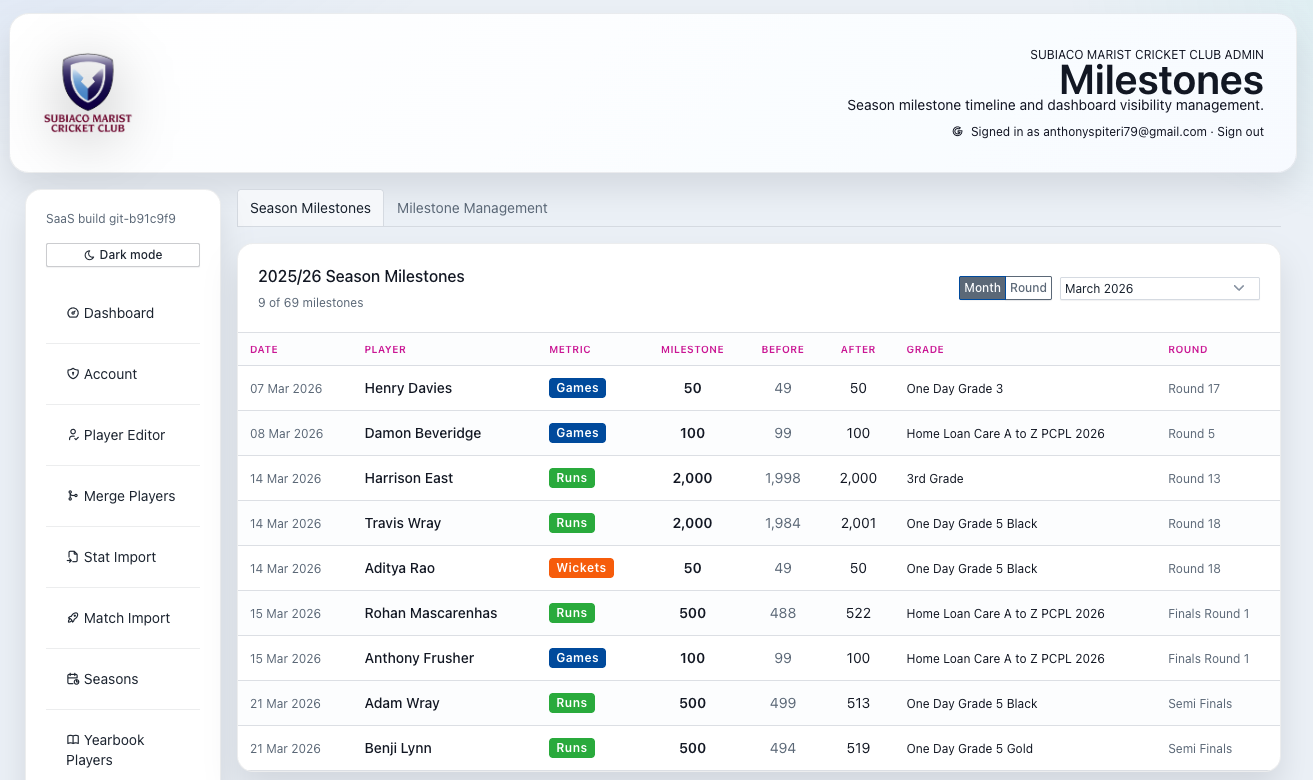
The platform exists to give clubs a permanent, searchable place for their records. It connects current season data with the older history that gives a club its identity, so milestones, leaderboards, player profiles and honour boards can be maintained without rebuilding the same spreadsheets every year.
Built for public records, not hidden spreadsheets
The problem ClubStats was built to solve
Australian cricket clubs have lived through several systems and several eras of record keeping. MyCricket became part of the way many clubs stored and checked their playing history. As clubs moved on to Play Cricket and PlayHQ, the current season workflow improved in some areas, but the historical picture became harder to keep together.
A club might know its premiership teams, life members, first XI captains, best bowling figures, highest scores and 200-game players, but that knowledge is often spread across annual reports, old scorebooks, static honour boards and long-lived spreadsheets. When a volunteer leaves, the club can lose context as well as data.
ClubStats was created to reduce that risk. The aim is not just to display numbers. The aim is to preserve the story behind those numbers in a way future committees, players, families and supporters can still find.
Why ClubStats exists
ClubStats exists because local cricket history deserves the same care as current fixtures and results. A century made fifteen years ago, a ten-wicket season, a junior who becomes a senior captain, a premiership side, a long-serving club person: these are the details that turn a club from a schedule into a community.
The platform helps clubs bring those details into one place. Historical imports can sit alongside current Play Cricket and PlayHQ data. Player profiles can show career records and season context. Leaderboards and milestones can update without requiring a committee member to rebuild formulas every time a season ends.
The practical goal is simple: less admin, more useful stats, and a club archive that continues to grow instead of fragmenting every time systems change.
About Anthony Spiteri
ClubStats was founded by Anthony Spiteri, a cricket tragic, club person and technology leader who built the first version to solve the records problem at his own club. The project grew from hands-on club admin, historical cleanup, import work, player matching and the recurring realisation that many clubs were fighting the same battle with different spreadsheets.
Anthony has been involved in cricket as a player and through club operations, and has spent his professional career building and leading technology platforms. That combination shaped ClubStats: it needed to be practical enough for volunteers, robust enough for messy historical data, and polished enough for clubs to publish public records with pride.
The product is deliberately club-first. It recognises that every club has its own history, naming conventions, grades, imported seasons, missing records and committee processes. ClubStats is built around those real-world conditions rather than assuming every club starts from clean data.
The long-term vision
The long-term goal is for ClubStats to become a trusted home for cricket club history across Australia. Not a replacement for official competition management, but a dedicated archive and presentation layer for the records clubs care about most.
As more clubs come online, each club portal, player profile, milestone page, leaderboard and season record adds to a broader searchable history of community cricket. That creates value for current players, past players, families, supporters, sponsors and the volunteers who keep clubs running.
Cricket clubs already preserve culture through photos, honour boards, stories and presentation nights. ClubStats gives the statistical side of that culture a permanent digital home.