 clubstats.cricket
Cricket Club Stats Software
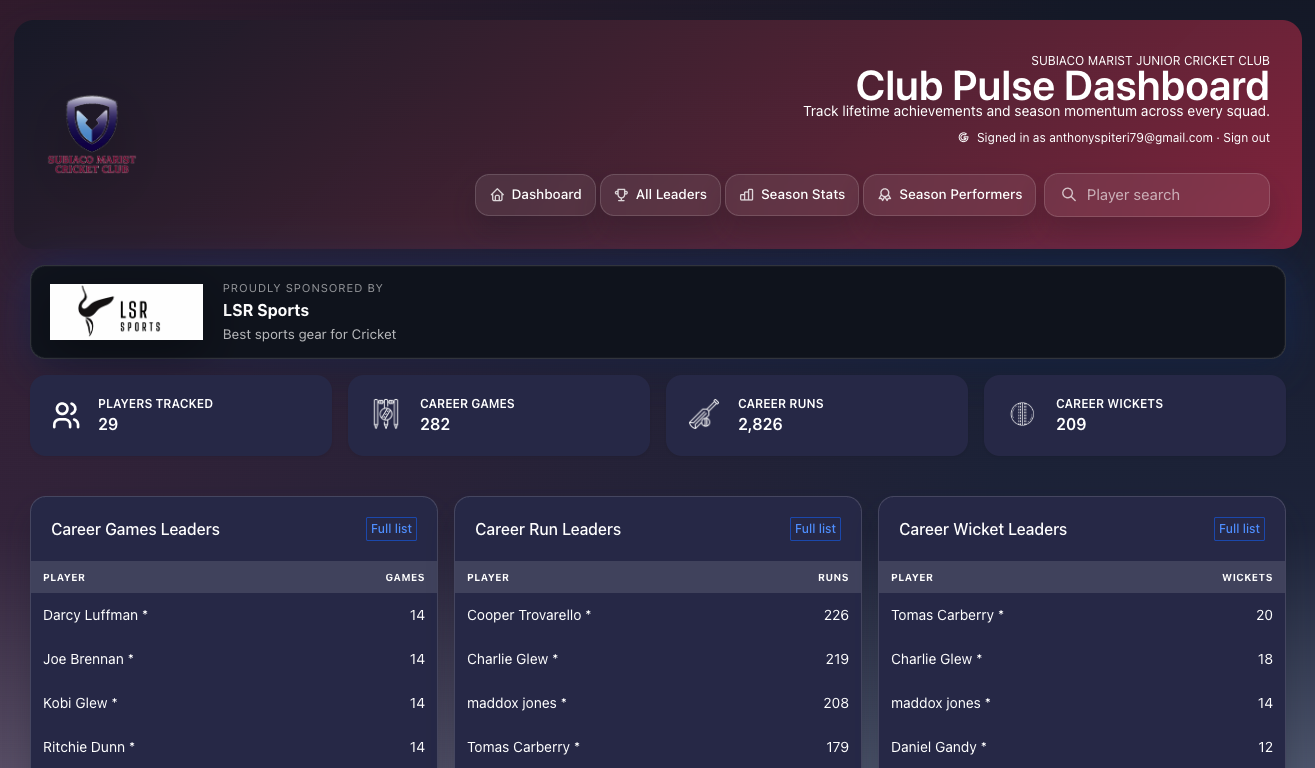
Cricket club stats should be easy for players, volunteers, committees and supporters to find. ClubStats gives clubs a dedicated platform for player statistics, all-time records, season summaries, milestones, honour boards and historical data.
For clubs searching for cricket club stats software, the real challenge is not just showing a few tables. The challenge is keeping current Play Cricket or PlayHQ data, older MyCricket-era history, manual records and club-specific achievements together without rebuilding spreadsheets every season.
Built for public records, not hidden spreadsheets
Why cricket club stats need their own platform
Most cricket clubs have stats somewhere. They might be in Play Cricket, PlayHQ, old MyCricket exports, annual reports, yearbooks, spreadsheets, PDFs, scorebooks or committee folders. The problem is that those sources rarely tell the complete club story on their own.
A player profile might need career games, runs, wickets, catches, highest scores, best bowling, season-by-season context and milestone history. A club leaderboard might need to combine historical totals with modern scorecard-backed seasons. A presentation night might need clean lists of record breakers, 50-game players, 100-game players and season performers.
ClubStats is built for that club-owned layer. It helps cricket clubs turn stats from a collection of disconnected sources into a maintained public archive.
Player stats, records and leaderboards
Cricket club stats become more useful when they are attached to players and records, not just exported as raw data. ClubStats gives each player a public profile with career and season context, then connects those profiles to club leaderboards and records.
Batting records can show runs, averages, centuries, fifties and highest scores. Bowling records can show wickets, best bowling, averages and five-wicket hauls. Fielding and wicketkeeping contributions can sit beside the traditional batting and bowling measures so more achievements are visible.
This is the difference between a spreadsheet and a club stats platform. The numbers are still important, but they become easier to browse, compare, share and recognise.
Combining PlayHQ, Play Cricket and historical stats
Current season platforms are valuable because they capture fixtures, scorecards and match activity. ClubStats uses that current data as part of the picture, but also recognises that many clubs have decades of history that started before the latest competition system.
Historical cricket club stats often arrive as career totals, yearbook data, manual records or legacy imports. Modern seasons may have match-level scorecards and richer context. ClubStats is designed to handle that mixed reality carefully so clubs can preserve older records while still showing modern season detail.
That matters because clubs do not want double-counted careers, missing seasons or leaderboards that ignore the players who built the club before the current platform existed.
Milestones and club recognition
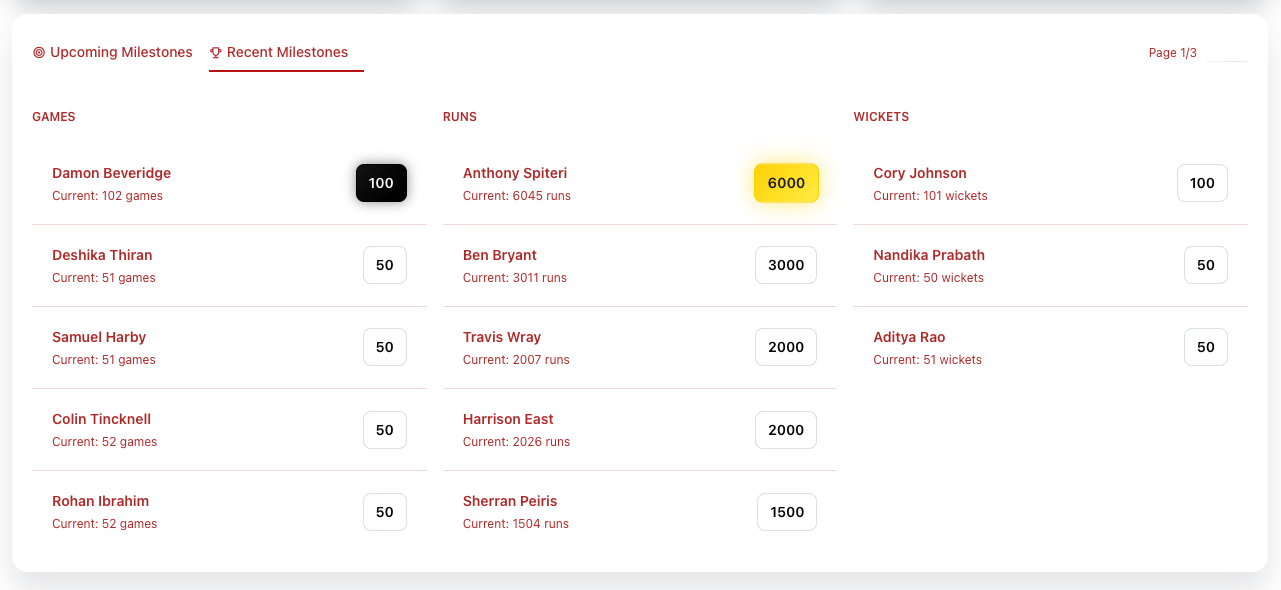
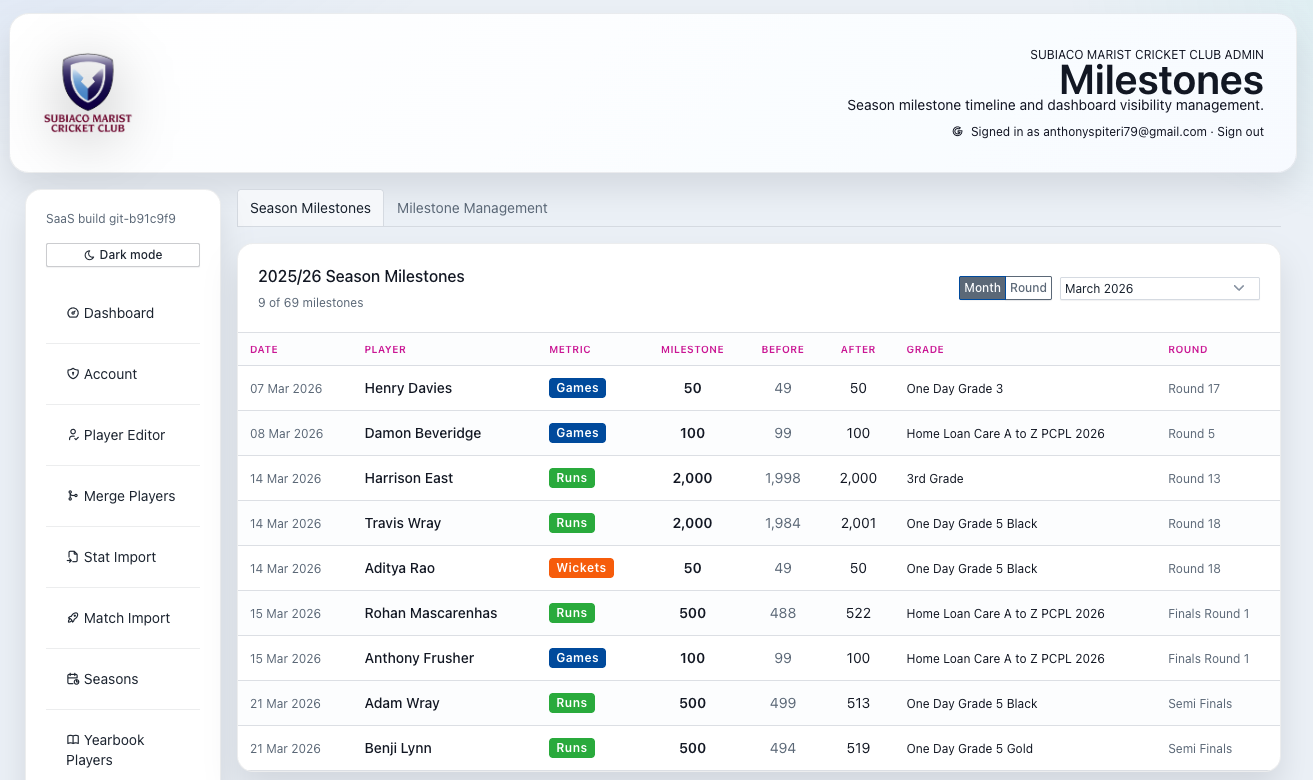
Cricket club stats are not only for record keepers. They help clubs celebrate players and volunteers throughout the season. Games played, runs, wickets, catches, centuries, five-wicket hauls and long-service milestones all become easier to recognise when the underlying data is organised.
ClubStats helps clubs surface those milestones in a way that can be used for social posts, presentations, match day recognition and committee reporting. It also supports honour boards and club recognition, so statistics and achievements can live in the same ecosystem.
The result is a club history that feels alive during the season, not a record book that only gets opened once a year.
The latest ClubStats feature set
Clubs can use built-in automatic imports, with tenant approval controlling activation where required, to reduce repeated file handling, then use Match Editor where an authorised correction is needed before the record is presented publicly.
Player Analysis gives clubs more useful performance context. The experimental Honours Board workflow keeps awards, service, leadership and premiership recognition connected to the wider club archive.
Fantasy Cricket is available through ClubStats' strategic partnership with MyClubtap. That keeps ClubStats focused on statistics and history while clubs gain a pathway to a purpose-built fantasy experience.
A better home than spreadsheets alone
Spreadsheets are useful, but they become fragile when they are the only home for cricket club stats. Formula errors, duplicated files, missing context and volunteer turnover can all make records harder to trust over time.
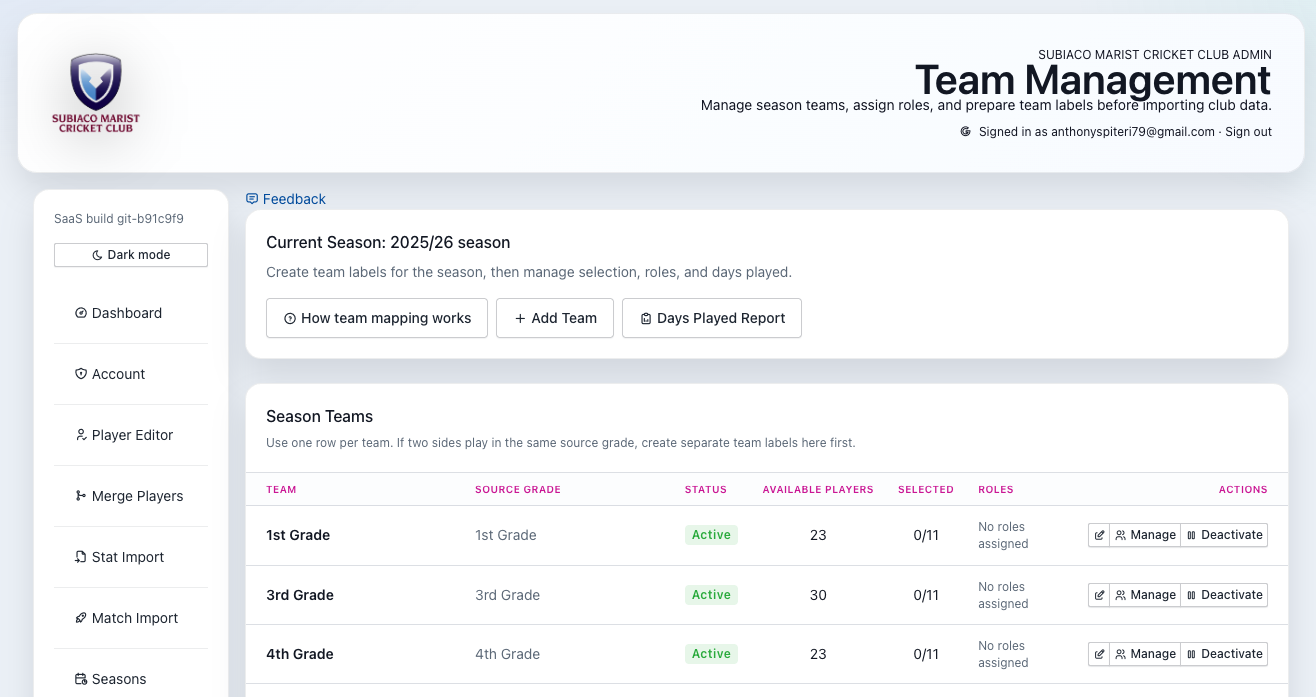
ClubStats does not remove the need for good data management, but it gives clubs a more durable presentation and archive layer. The public pages are built for players and supporters, while admin workflows help clubs maintain the records behind the scenes.
For Australian cricket clubs that care about their story, ClubStats turns cricket club stats into something searchable, presentable and easier to keep up to date.